PDF Flow
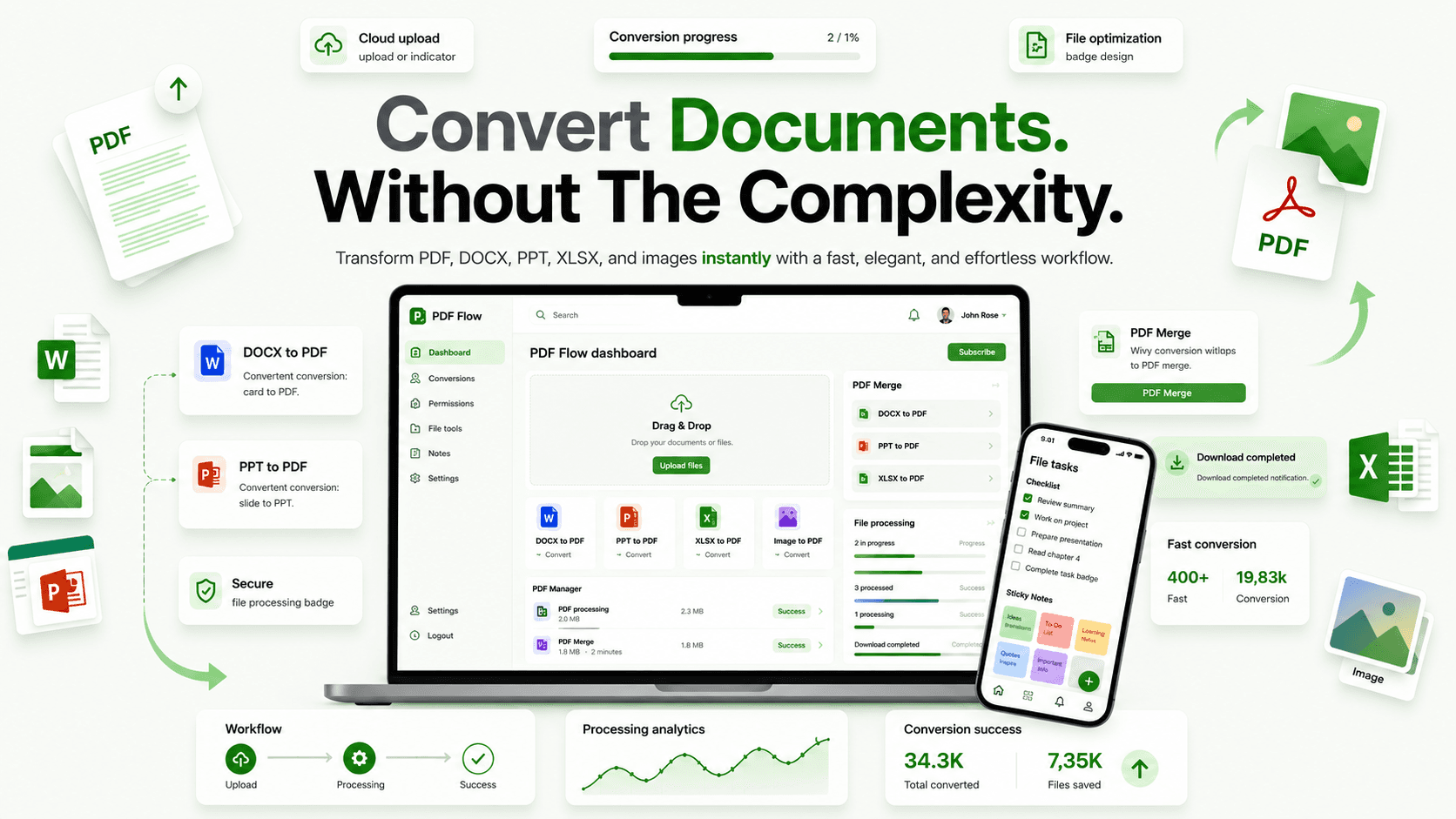
Elegant browser-based document converter
The Challenge
Performing file conversions and document editing in-browser quickly without crashing user interface threads or sending private data to server pipelines.
Engineering Solution
Leveraged the browser's raw processing performance. Used pdf-lib to perform document merges, image compilations, and format operations entirely on the client, resulting in near-instant outputs with maximum security.
Key Product Capabilities
Client-side conversion models for DOCX, PPT, XLSX, and images straight into optimized PDF formats.
Fast PDF merging pipeline combining bulk PDFs into a single file with custom page indices.
Zero login required, zero remote bandwidth overhead, keeping private documents completely local.
Code Implementation
// Client-side PDF Merging implementation using pdf-lib in Next.js
import { PDFDocument } from 'pdf-lib';

export const mergePDFDocuments = async (pdfArrayBuffers) => {
  // Create a new empty PDF Document
  const mergedPdf = await PDFDocument.create();

  for (const buffer of pdfArrayBuffers) {
    // Load current PDF
    const pdf = await PDFDocument.load(buffer);

    // Copy all pages into the merged document
    const copiedPages = await mergedPdf.copyPages(pdf, pdf.getPageIndices());
    copiedPages.forEach((page) => mergedPdf.addPage(page));
  }

  // Save and compile to Uint8Array
  const mergedPdfBytes = await mergedPdf.save();
  return mergedPdfBytes;
};
Technologies Used
Direct Actions
Architecture Stack
Responsive layout powered by Tailwind CSS 4's compiler and client-side StepperFlow hooks.
Client-side binary manipulation library that recompiles PDF streams directly in browser memory.
Reads incoming files as raw ArrayBuffers, feeding them to compilers without server transport.